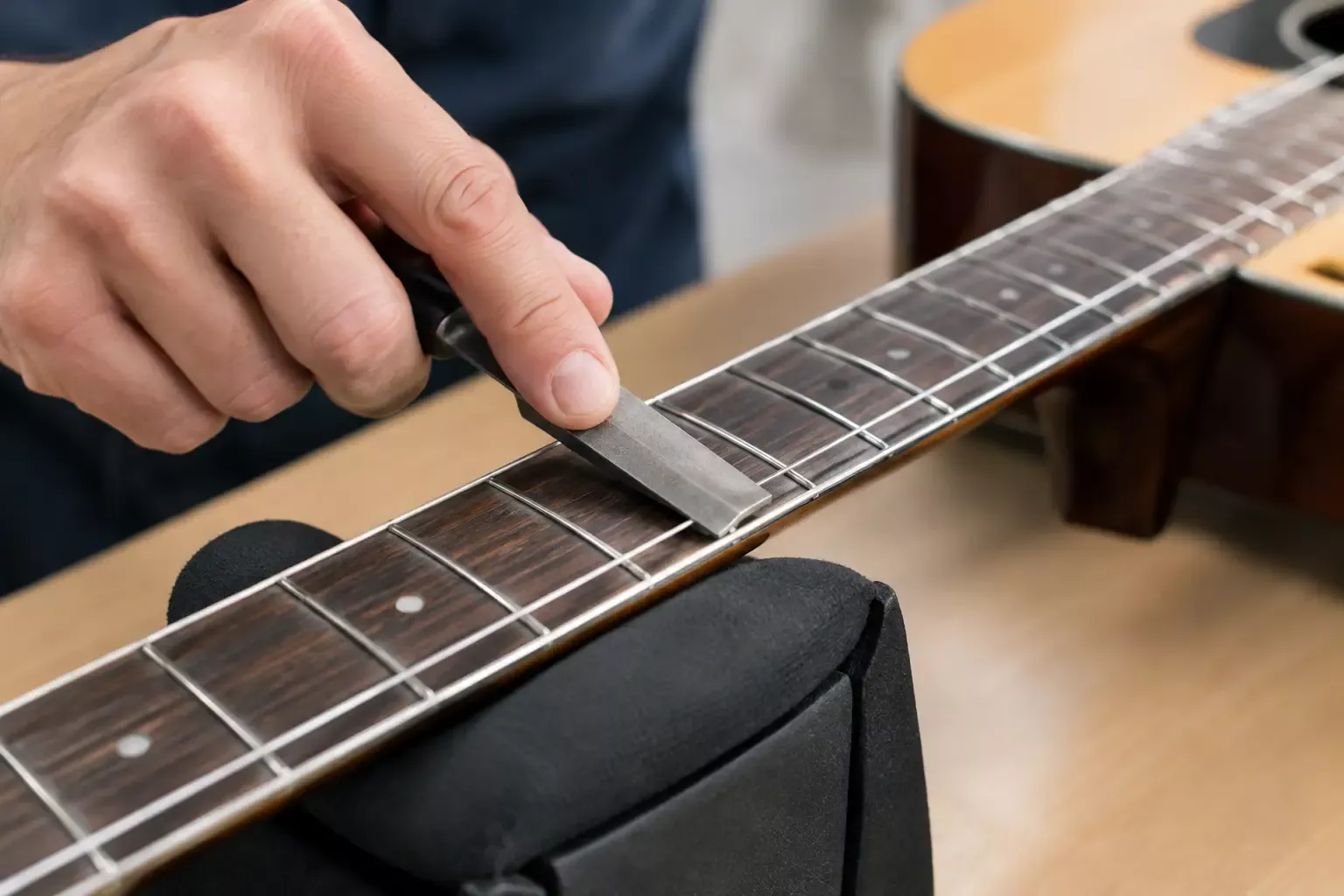
A guitar can be perfectly in tune at the open strings and still feel wrong the moment you play above the fifth fret. Notes choke during bends, chords buzz in one position but not another, and the action has crept high because lowering it exposes a problem further up the neck. This is where fret restoration becomes more than cosmetic work. It is the process of restoring a consistent string-contact surface so the instrument can be set up accurately and played with confidence.
Fret problems are often blamed on a “bad neck” or poor strings. Sometimes that is true, but worn, loose or uneven frets are just as commonly responsible. The right repair depends on what the frets, fingerboard and neck geometry are actually doing under string tension – not on how worn they look from a distance.
What fret restoration actually involves
Fret restoration covers several possible repairs, from a light polish to a full refret. The aim is always the same: make each fret work as part of an accurate playing surface, with a clean crown and a controlled relationship to the neck relief, bridge height and string action.
A basic fret polish removes oxidation and light surface marks. It can improve feel noticeably, particularly on an instrument that has been stored for a while, but it will not cure divots, buzzing or dead notes.
A fret dress, sometimes called a level, crown and polish, is more involved. The frets are assessed, levelled where appropriate, re-crowned to restore a defined contact point, then progressively smoothed and polished. A flat-topped fret may appear level, but it plays poorly because the string no longer has a precise point from which to vibrate. Re-crowning is what returns accurate intonation and a clean, familiar feel.
Where fret height is too low, wear is deep, frets are lifting, or previous levelling work has removed too much material, a refret may be the honest answer. This involves removing the old wire, preparing the slots and fingerboard, installing new fretwire, then carrying out the precision levelling and finishing work needed for the guitar to be set up properly.
The signs your guitar may need fret restoration
Visible grooves beneath the plain strings are a clear warning, especially around the first five frets. Yet visual wear alone does not tell the whole story. A guitar with modest-looking wear can still have serious playing issues if one or two frets sit high, the fingerboard has moved with humidity changes, or the neck has developed uneven geometry.
Pay attention to what happens while you play. Repeated choking on bends at the same area of the neck, a note that dies early, rattling that remains after a sensible setup, or a buzz isolated to one string and fret are all useful clues. So is the need to run unusually high action just to keep the guitar playable.
Bass players may notice clattering notes, inconsistent sustain or an inability to get a low, controlled action without excessive noise. On acoustic guitars, fret wear can be mistaken for a high-action-only problem. Raising the saddle can help a neck-angle issue, but it does not make uneven frets level. On electrics with wide bends, a lack of fall-away in the upper register can make an otherwise good setup feel restrictive.
Why a setup should come before the verdict
Fretwork cannot be judged properly without considering the whole instrument. Neck relief changes the string-to-fret relationship along the board. String gauge, tuning, picking attack and playing style all affect how much clearance a player needs. A heavy-handed rhythm player in standard tuning does not necessarily need the same geometry as a player using light strings, low action and wide blues bends.
That is why a proper assessment starts with measurements. Relief should be mapped rather than guessed, and frets should be checked under string tension where needed. A neck can look straight when unstrung yet reveal a tension-dependent fret problem once it is tuned to pitch.
At RG Guitar Tech, the workshop approach uses full-neck digital relief mapping and under-string fret assessment to separate a setup adjustment from a genuine fret issue. That distinction protects both the guitar and your budget. If a nut slot, truss rod adjustment or bridge correction solves the problem, there is no value in removing fret material. If the frets are preventing a stable setup, the report should make that clear before work begins.
Level, dress or refret: choosing the right repair
A fret level and dress is usually suitable when there is enough fret height remaining and the wear or unevenness can be corrected without making the frets uncomfortably low. It is often the best route for a well-used instrument with localised wear, a few high frets or small inconsistencies that limit the action.
The trade-off is simple: levelling removes material from the highest frets until the playing surface is consistent. If the remaining fretwire is already low, another dress may leave too little crown height for good feel, secure bends and future maintenance. There is no fixed measurement that suits every player, but a technician should explain whether the result will match your preferred setup rather than simply saying the frets are “fine”.
A partial refret can make sense when wear is concentrated in the lower positions and the upper frets remain healthy. Matching the new wire to the existing fret size, then blending the transition carefully, is critical. It is not a shortcut if it is carried out properly, but it is not right for every neck.
A full refret is the longer-term solution for deeply worn, very low or extensively uneven frets. It is also an opportunity to choose wire that suits the instrument and player. Taller wire can give a lighter touch and make bending easier, while lower or wider wire may suit a different feel. The best choice is not automatically the biggest fretwire available. It needs to suit the fingerboard radius, playing style, string gauge and the character of the guitar.
What careful fretwork changes at the bench
Good fret restoration is measured in playing results, not just the shine of polished metal. Once the frets are levelled and crowned correctly, the guitar can be set with neck relief, nut-slot height, bridge action, pickup height and intonation working together.
The difference is often immediate. Notes speak more evenly, bends travel without choking unexpectedly, chords sound cleaner and the action can be lowered to a practical point without trading comfort for buzz. Intonation also becomes more dependable because the string is leaving each fret from a defined crown rather than a flattened, worn surface.
That does not mean every guitar should be set extremely low. Some players need more clearance for aggressive attack, altered tunings or heavier strings. Vintage instruments may also deserve a more conservative approach, especially where original fretwire, binding or fingerboard condition matters. The aim is a reliable setup that suits the player, not a specification chosen for a photograph.
Protecting restored frets between services
Fretwear is normal, particularly on the plain strings and on instruments played frequently. A clean, dry cloth after playing removes sweat and residue that can dull the fret surface. Keeping the guitar in a reasonably stable environment also reduces seasonal movement that can affect neck relief and fret seating.
String changes are a sensible time to check for developing grooves, rough fret ends or a change in action. If the guitar starts behaving differently, do not immediately raise the bridge saddles or tighten the truss rod without a diagnosis. Those adjustments may mask the cause and make the next setup more complicated.
For Nottingham players, a workshop assessment can establish whether the issue is a minor dress, a geometry correction or the point at which a refret is more sensible. UK customers using a repair-by-post service should include clear details about string gauge, tuning, current action and the exact positions where buzzing or choking occurs. Those details make the final setup far more personal and accurate.
A well-restored fretboard should not draw attention to itself. You should simply be able to tune up, play hard or soft, bend where you want, and trust that the guitar will respond the same way at rehearsal, at home and on stage.