I recently completed a full fret level and crown on this guitar. I first set the neck to zero relief, then levelled and crowned the frets. With the neck straight and unloaded, the fret tops were level.
But when the strings were tuned back up to pitch, I could still feel fret rock in places. Here’s why that can happen—and how I’m addressing it.
String tension changes the neck’s shape
A guitar neck is stiff, but it is not perfectly rigid. The strings pull the neck forward with considerable force. The truss rod and the neck’s own structure resist that pull, and the balance between those forces creates the neck’s relief.
That load can change the neck’s curvature, and it may not change evenly from one end to the other. A neck can develop a small hump, twist, or local change in its profile once it is under tension. When that happens, frets that appeared level with the neck straight and the strings off can sit at slightly different heights when the guitar is tuned up.
So a fret rocker check can give a different result depending on the state of the neck. Relief is the neck’s lengthwise curve; it is not itself a high fret. The important point is that string tension can reveal a neck shape—and fret relationship—that was not present during the unloaded check.
Levelling the frets in playing conditions
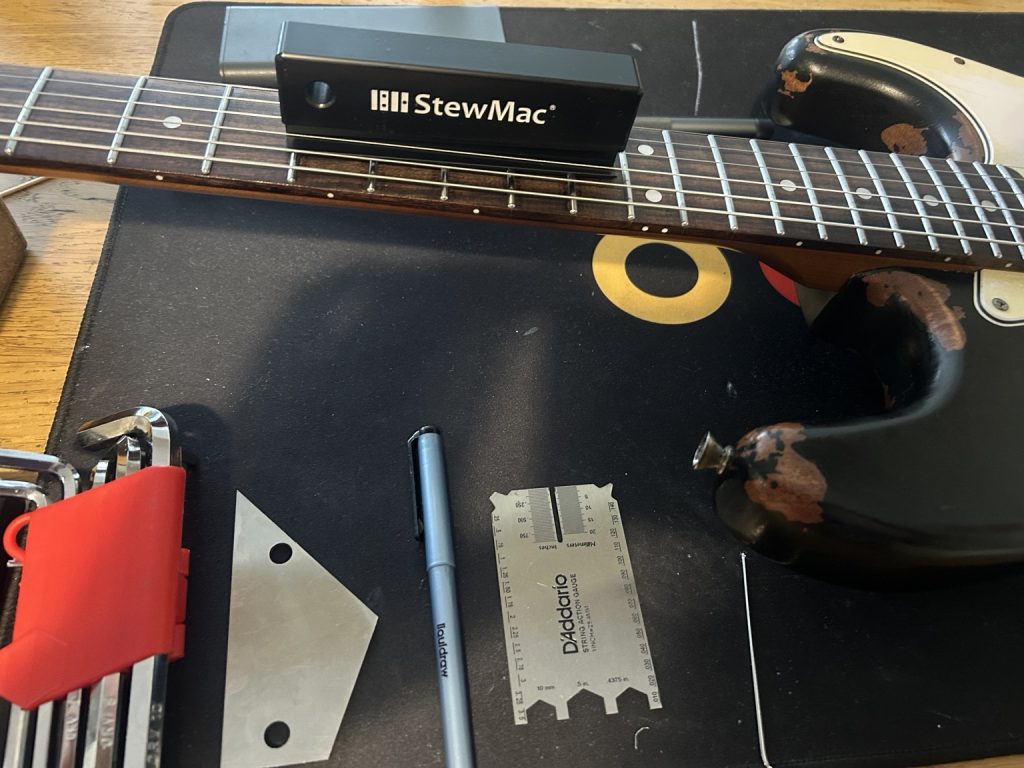
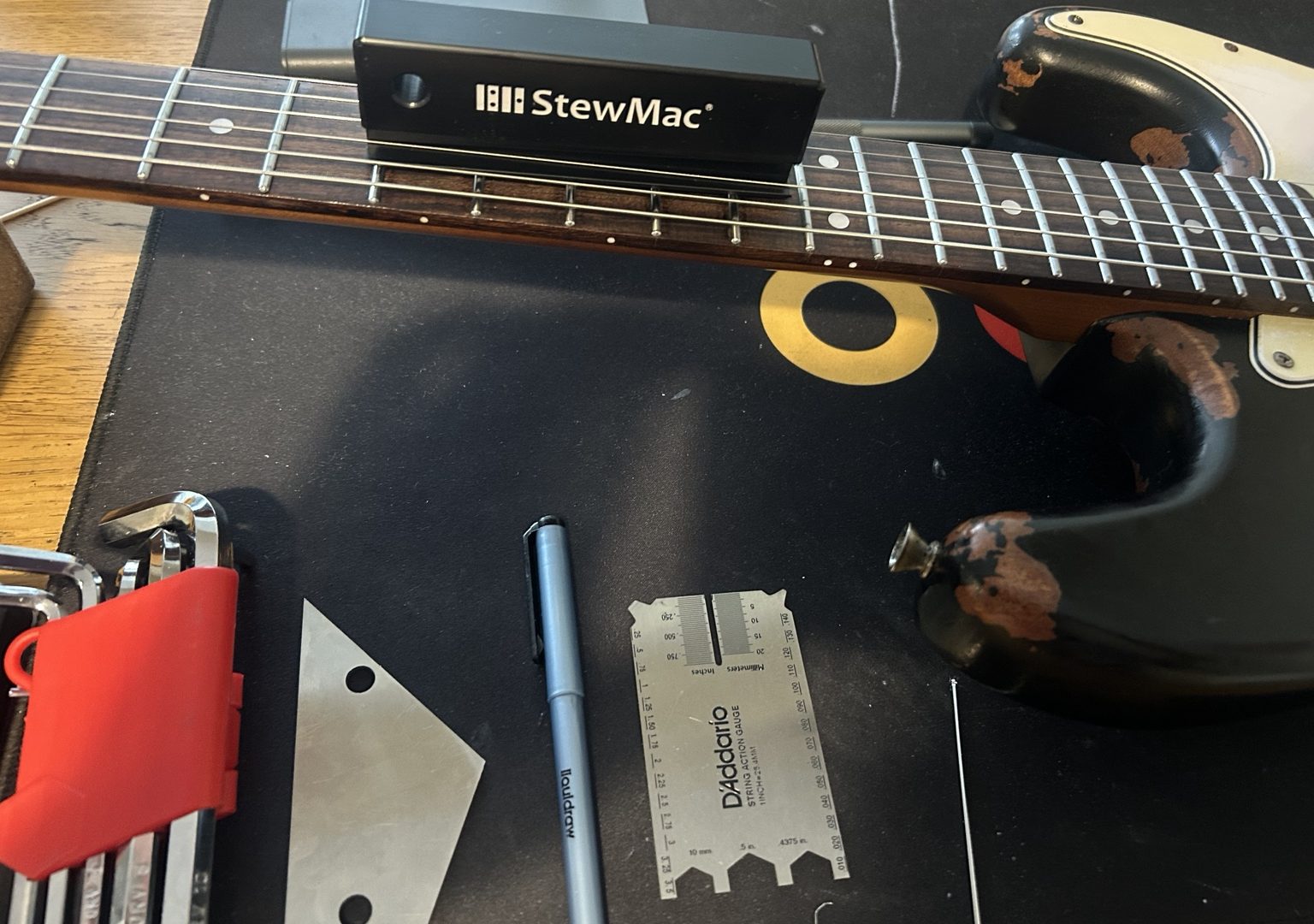
For this job, I’m using the new StewMac Fretbar Understring Leveler. It fits between and beneath the strings, so I can work on the frets while the guitar remains tuned to pitch and the neck stays under string tension.
That lets me assess the fret tops with the neck carrying the load it experiences in normal playing. Instead of taking the strings off and guessing how the neck may move once they go back on, I can see the loaded neck’s humps, twists, and high or low areas as I work. StewMac describes the Fretbar as a way to level frets with the strings on and the guitar tuned to pitch. See the StewMac Fretbar Understring Leveler: https://www.stewmac.com/stewmac-essentials/stewmac-fretbar-understring-leveler/
The goal: a level fret surface under tension
I’ll use the Fretbar to refine the fret level under tension, then re-crown and polish the frets as needed. After that, I can check the setup again and make sure the guitar plays cleanly across the neck.
Every guitar responds a little differently to string tension. This is why careful fretwork means checking the instrument in the condition it will actually be played: tuned up, set up, and carrying the load of its strings.
In the photo: the StewMac Fretbar positioned over the fretboard while the strings remain under tension.